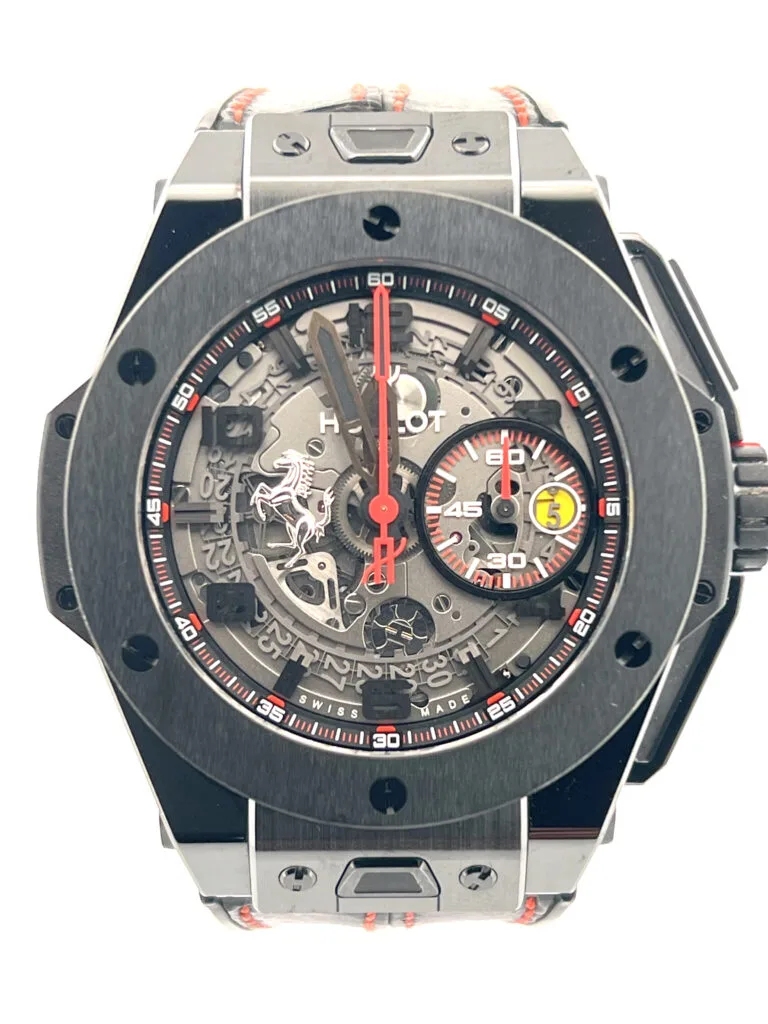
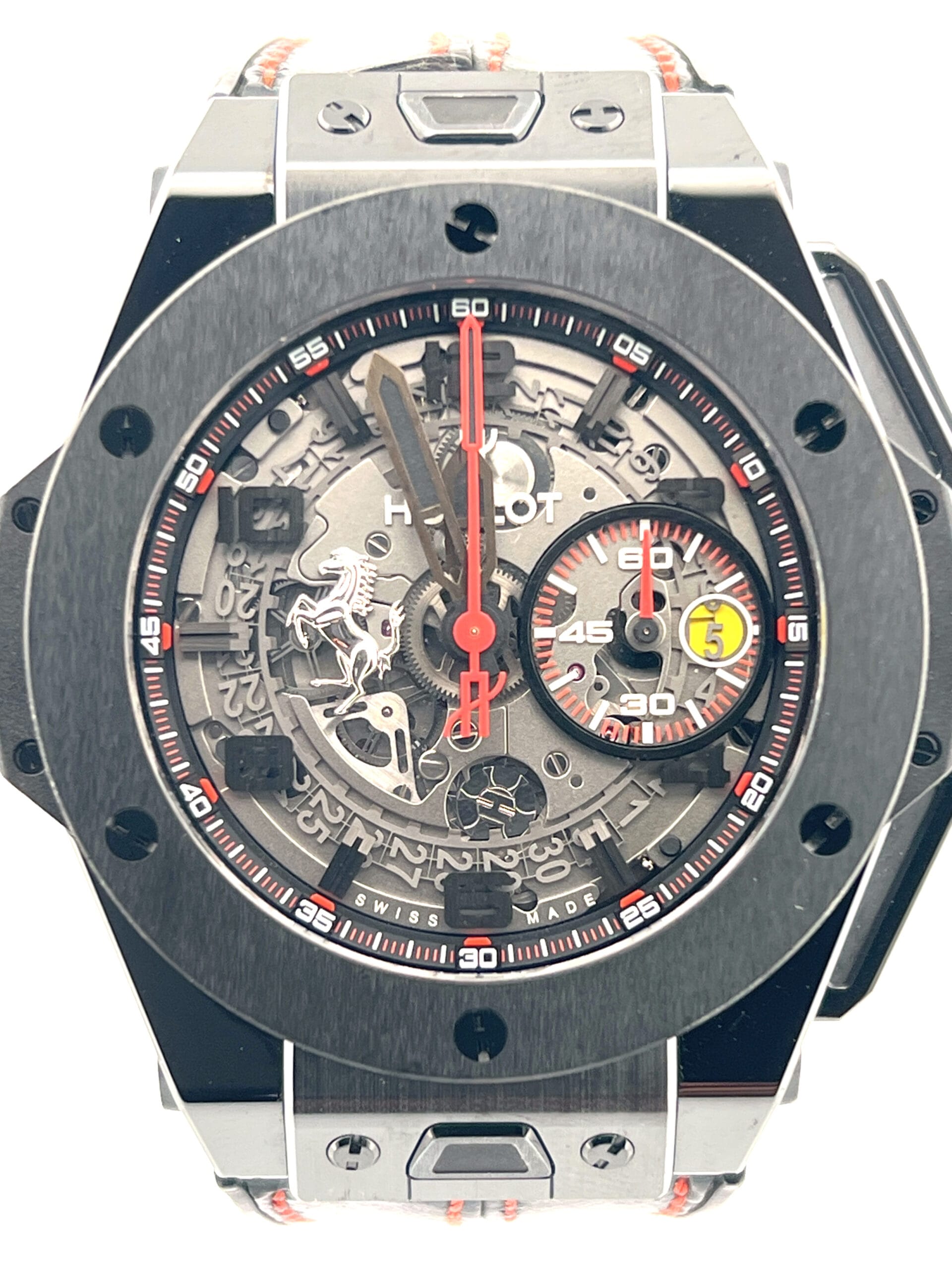
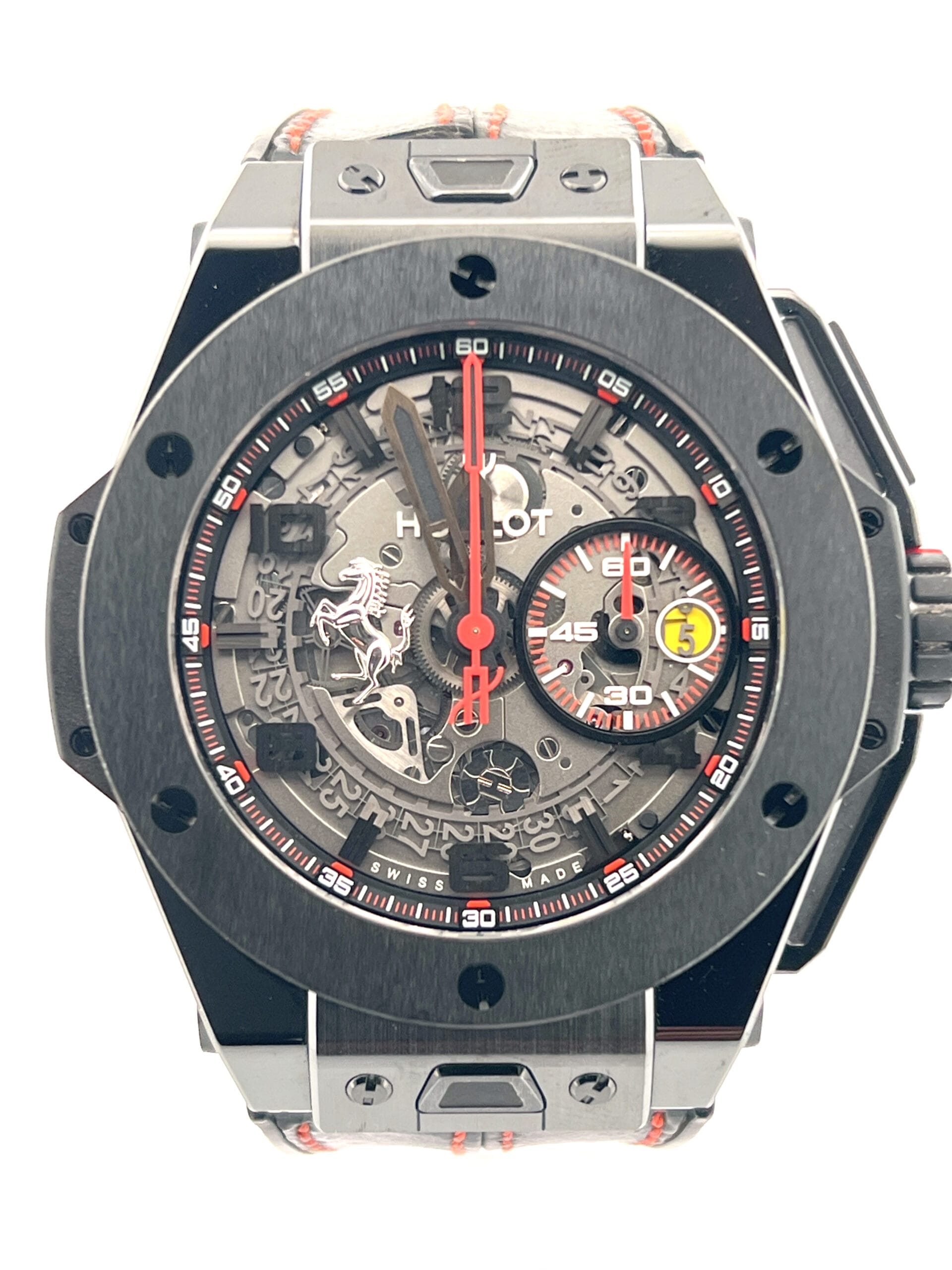
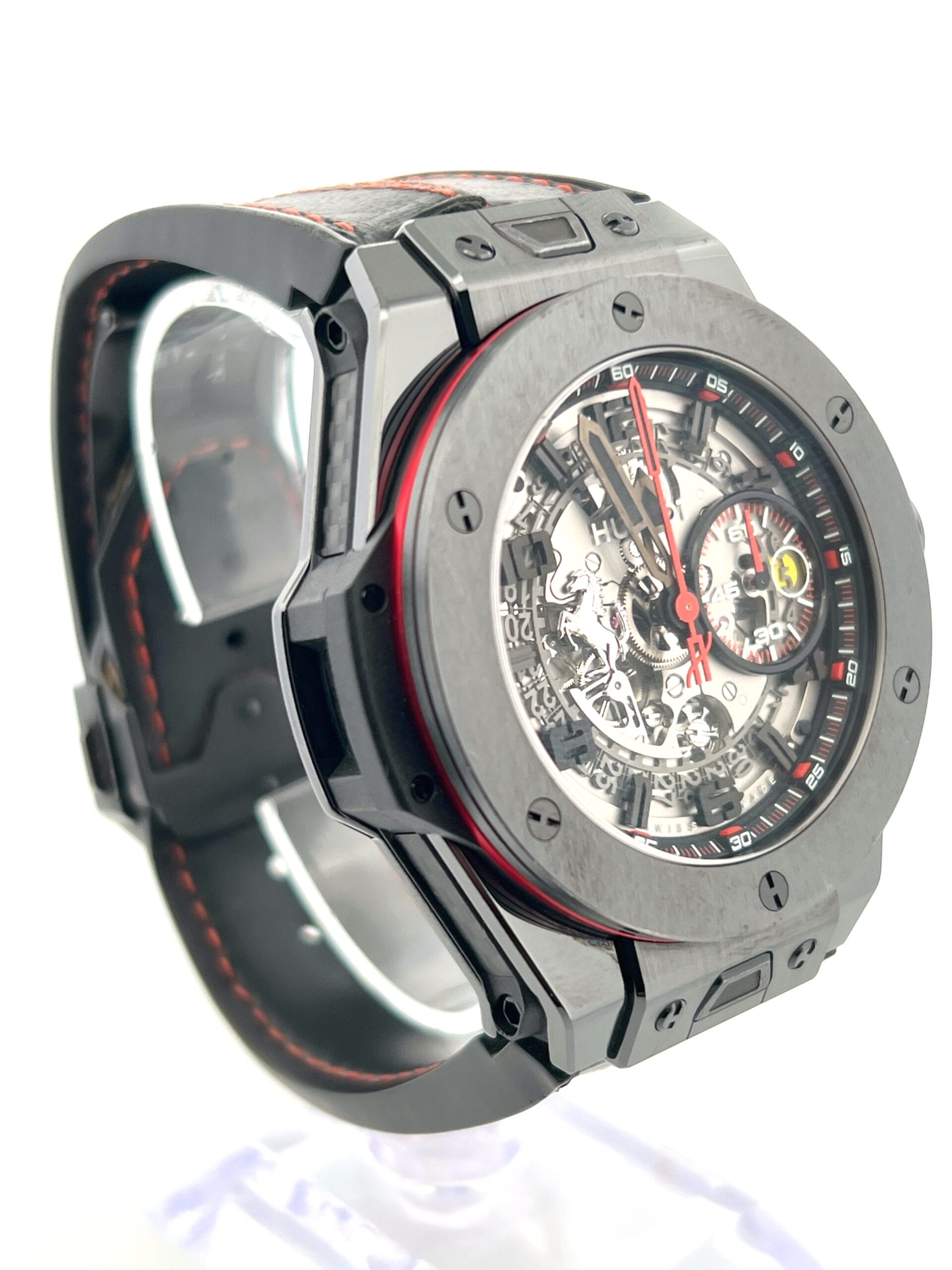
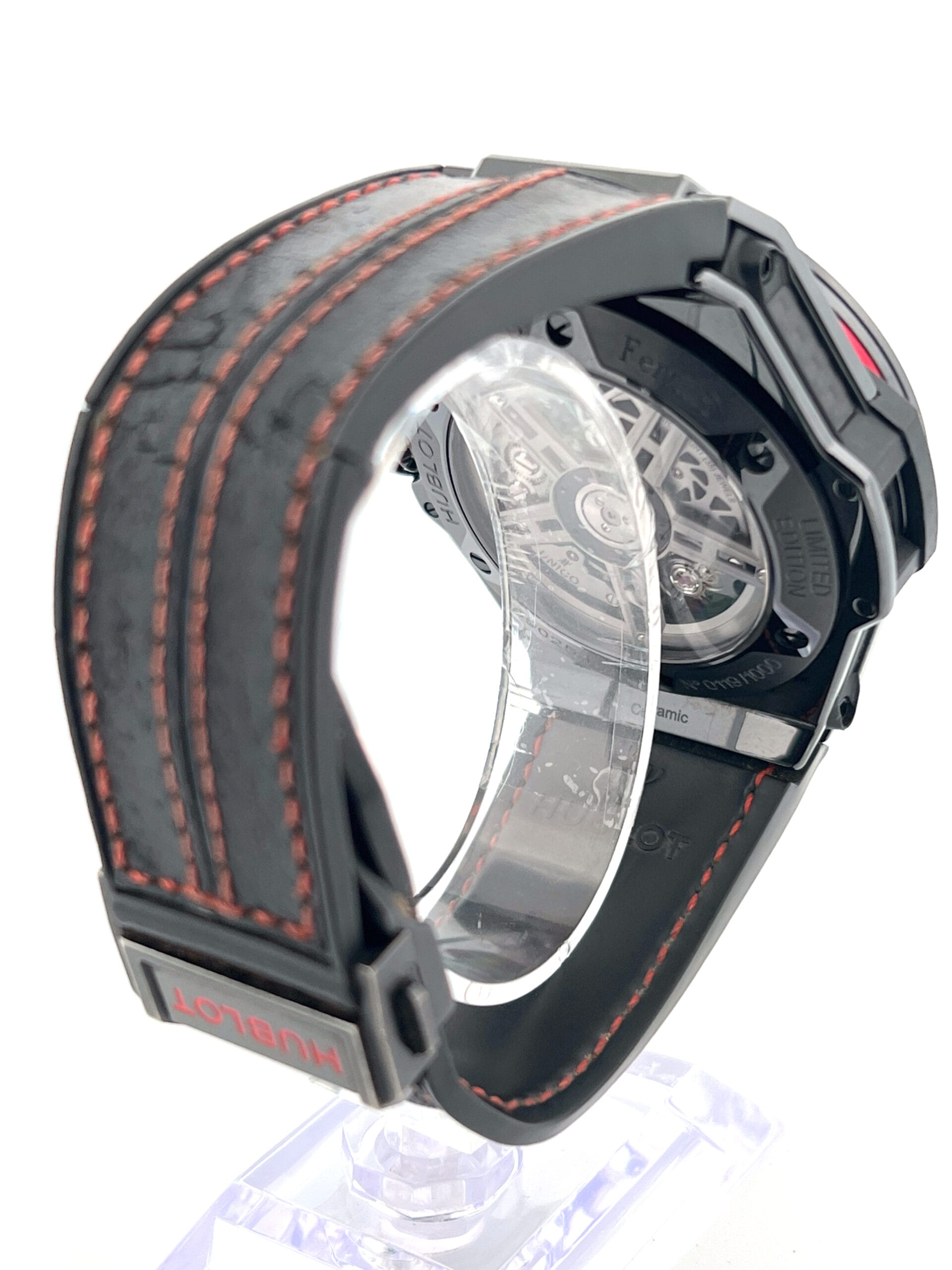
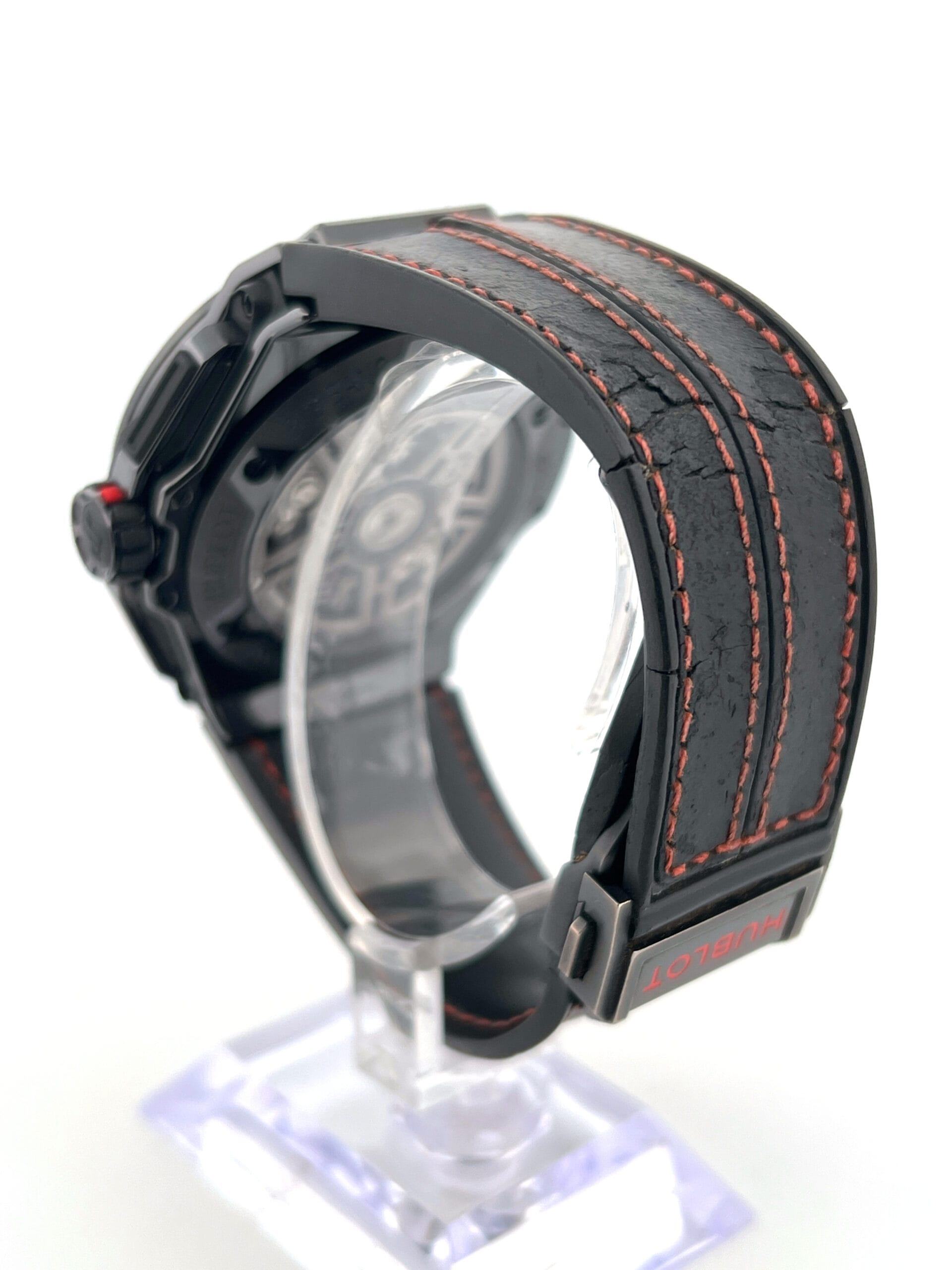
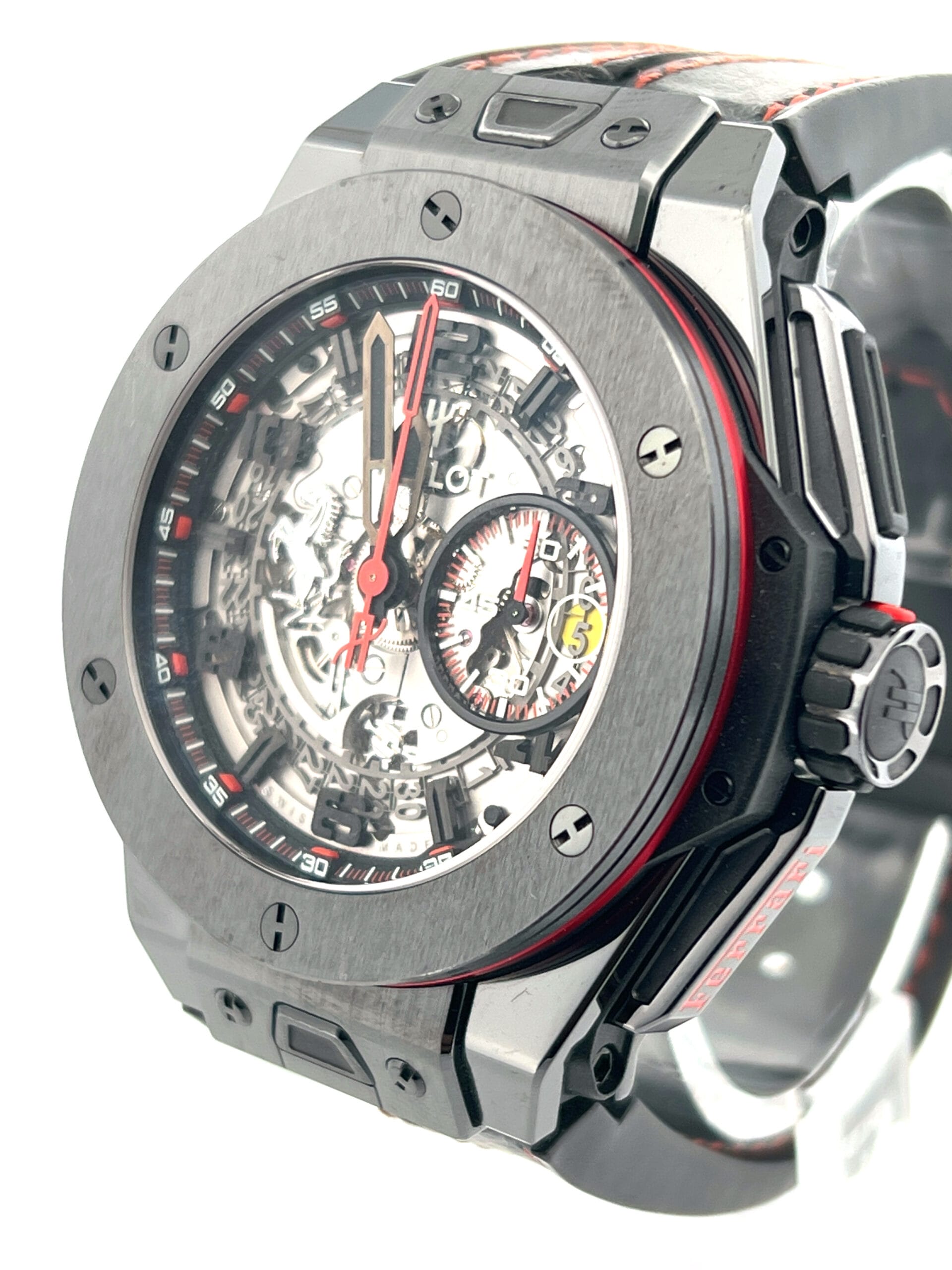
Hublot Big Bang Ferrari 401.CX.0123.VRIQD6Q3
| Brand | Hublot |
| Model | Big Bang Ferrari |
| Reference | 401.CX.0123.VRIQD6Q3 |
| Condition | Honest Condition |
| Accessories | Full Set |
| Case | Black Ceramic |
| Case Size | 45.5mm |
| Dial | Skeleton Dial with Ferrari Branding |
| Movement | Automatic Chronograph |
| Functions | Chronograph, Date |
| Strap | Black Leather Strap with Rubber Lining |
| Water Resistance | 100 Metres |
Why It Belongs
The Big Bang Ferrari is more than a collaboration between two famous names. It brings Ferrari’s approach to engineering into watchmaking, creating a chronograph that feels mechanical, purposeful and full of character. Every element has been designed to reinforce that connection, making it one of Hublot’s most distinctive partnership models.
The Story
Unlike many automotive collaborations that stop at a logo on the dial, the Big Bang Ferrari integrates Ferrari’s design language into the watch itself. The skeletonised dial reveals the movement beneath, much like lifting the engine cover of a mid-engined supercar. The chronograph pushers take inspiration from Ferrari’s pedals, while the oversized crown and layered ceramic case add to the impression that every component has been engineered with purpose rather than decoration. It’s bold, technical and unmistakably modern.
The partnership between Hublot and Ferrari was built around a shared appreciation for innovation and performance. Rather than producing a conventional racing-themed watch, Hublot created something that reflects Ferrari’s engineering philosophy through its architecture and construction. The result is a watch that feels less like branded merchandise and more like a genuine extension of the collaboration—one that continues to stand out within the Big Bang collection.
Collector’s Insight
What I appreciate most about this reference is that the Ferrari influence goes beyond the badge. Even if you removed the prancing horse from the dial, you’d still recognise that the watch was designed with automotive inspiration at its core. That’s what gives it lasting appeal. It doesn’t rely on the partnership to justify its existence—the design speaks for itself.